
Share this article
Subscribe to our Newsletter

Jobs and Skills Australia has released JSA Atlas, an interactive platform with government-sourced insights on national, state and regional labour markets.
The platform assists HR teams and business owners to:
- Review labour market conditions for certain occupations and industries
- Gain better insights into emerging areas of demand and forecasts
- Understand occupation shortages and workforce trends that inform government policy
Strengthening your business case for skilled migration
Using the JSA Atlas tool to extract labour market insights can strengthen your business case for accessing the skilled migration program for particular occupations—whether you’re presenting to internal leadership or supporting your organisation’s Nomination applications for skilled migrants.
Below are some insights from the JSA Atlas for particular occupation groups.
| Occupation unit group | Shortage rating | Regional vacancy rates* | Shortage driver | Skilled migration options** |
|---|---|---|---|---|
| Metal Fitters and Machinists | In shortage – Australia and all States/Territories | 22.8% in Perth Inner {{ Read more }} 1.6% in Perth South West 2.9% in WA Wheat Belt View other regions | Long training gap | Fitter (General) {{ Read more }} Fitter and Turner Fitter – Welder Metal Machinist (First Class) |
| Electricians | In shortage – Australia and all States/Territories | 16.2% in Perth Inner {{ Read more }} 1.9% in Perth South West 2.8% in WA Wheat Belt View other regions | Suitability gap | Electrician (General) {{ Read more }} Electrician (Special Class) |
| Registered Nurses | In shortage—Australia {{ Read more }} State and region ratings vary per occupation category | 3.3% in Adelaide – Central and Hills {{ Read more }} 4.1% in Barossa – Yorke – Mid North 8% in South Australia Outback View other regions | Uncertain | Various occupation categories available |
| Construction Managers | In shortage – Australia {{ Read more }} State and region ratings vary per occupation category | 4.1% in Adelaide – Central and Hills {{ Read more }} 3.6% in Adelaide West 1.1% in Barossa – Yorke – Mid North View other regions | Suitability gap | Construction Estimator {{ Read more }} Construction Project Manager Construction Rigger |
| Mining Engineers | In shortage – Australia and all states/territories | 4.8% in Bunbury {{ Read more }} 8% in Mandurah 4.2% in Perth Inner 31% in WA Wheat Belt View other regions | Suitability gap | Mining Engineer (excluding Petroleum) {{ Read more }} Petroleum Engineer |
| Civil Engineering Professionals | In shortage – Australia and all States/Territories | 3.2% in Adelaide – Central and Hills {{ Read more }} 2.3% in Adelaide – West 1.7% in Adelaide – South View other regions | Suitability gap | Civil engineer {{ Read more }} Geotechnical engineer Quantity surveyor Structural engineer Transport engineer |
| General Practitioners & Resident Medical Officers | In shortage – Australia and all States/Territories | 4.9% in Mandurah {{ Read more }} 1.6% in Perth Inner 2.7% in Perth North East 7.9% in WA Wheat Belt View other regions | Uncertain | General Practitioner {{ Read more }} Resident Medical Officer |
| Geologists, Geophysicists & Hydrogeologists | In shortage – Australia, WA, NT & ACT | 2.3% in Perth Inner {{ Read more }} 1.7% in Perth South West 19.2% in WA Wheat Belt View other regions | Suitability gap | Geologist {{ Read more }} Geophysicist Hydrogeologist |
| Early Childhood (Pre-Primary School) Teachers | In shortage – Australia and all States/Territories | 2.6% in Adelaide – Central and Hills {{ Read more }} 2.3% in Adelaide – West 1.2% in Adelaide – North View other regions | Long training gap | Early Childhood (Pre-primary School) Teacher |
* ‘Vacancy rates’ refer to the ratio of online job ads (Internet Vacancy Index) to employment. This rate is available monthly for regional data and quarterly for national data.
** ‘Skilled migration options’ indicate relevant occupation categories available for visas and migration. Eligibility depends on various factors, including whether the occupation is listed on relevant state or territory occupation lists. Speak to Interstaff for advice.
Annual Market Salary Rates, future projections and other indicators
Interstaff has identified several other functions within JSA Atlas that support employers of visa holders:
Estimated vacancies
Three and five year estimates can demonstrate medium to long-term difficulties in securing suitable candidates for a particular occupation.
This data can support workforce planning and strengthen claims to sponsor a visa applicant for an extended period or permanent residence.
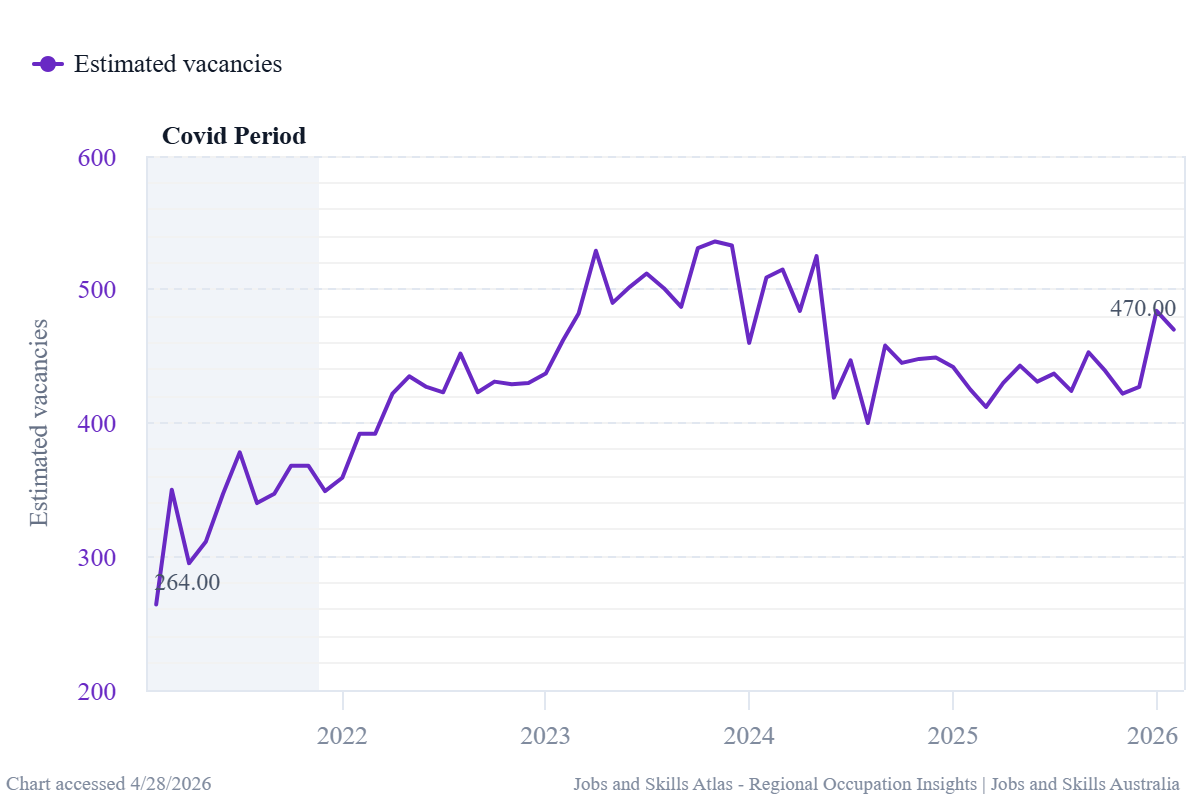
Estimated Vacancies for Construction Managers
Source: Jobs and Skills Australia Atlas, 28 April 2026.
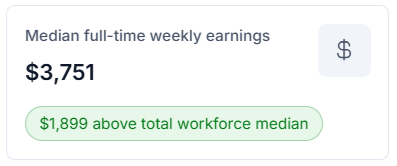
Median weekly earnings
This information can be used towards evidence of Annual Market Salary Rates (AMSR) where applicable, ensuring a visa applicant is paid what an Australian worker would earn for the same role and location.
Read more about determining the AMSR when sponsoring visa holders.
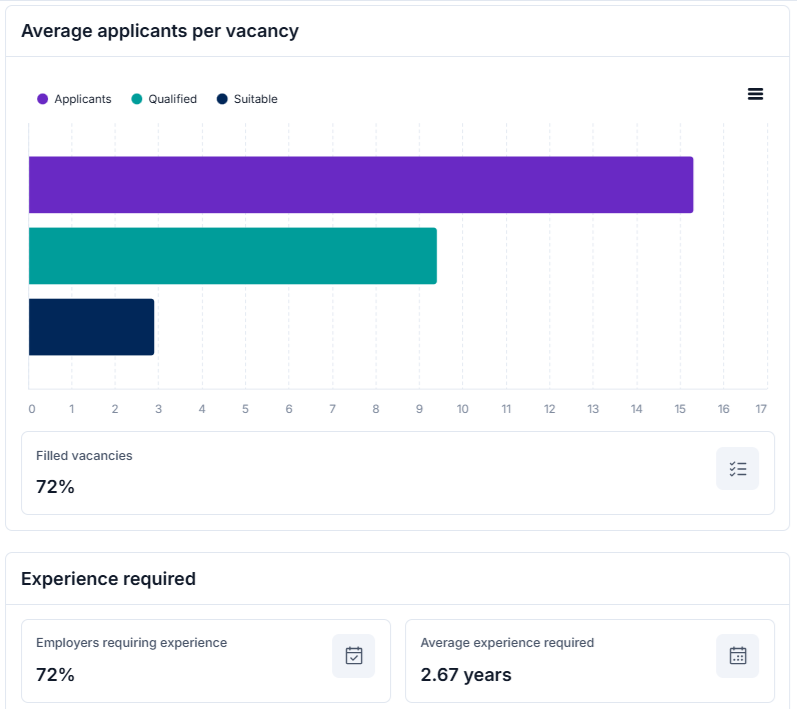
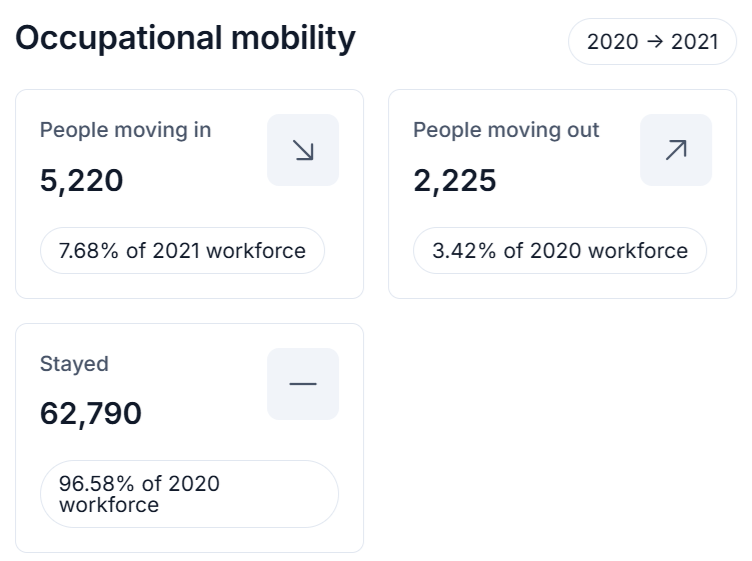
Recruitment and retention insights
Data indicating the number of qualified and suitable applicants can be used to demonstrate limitations that may exist in the local labour market.
Statistics on occupational mobility, such as trends in the number of people moving in, out or staying in their role, can provide insights into local labour market retention.
Sustainable people strategy: Global talent
Interstaff supports employers requiring sustainable global talent strategy to strengthen workforce capabilities.
Access our immigration insights to explore:
- Our tools for understanding labour market trends
- Work rights and visa conditions
- Skilled visa changes
- Temporary and permanent visa pathways